Case studies: real success stories and failures
Numbers, graphs, and lessons from real poker bot users. No names, but with specifics.
For whom: players considering bots; farmers who want to understand realistic expectations; investors who need numbers for their calculations.
Why case studies matter more than marketing promises
The poker bot market is full of claims about “guaranteed income” and “100% success.” Reality is more nuanced. The cases shown below are selected examples that went well; break-even and losing outcomes are common and are not shown here. Some users reach consistent profit within a month. Others blow their deposit in a week and blame the software, when the real problem runs deeper: a lack of understanding of the fundamentals, failure to follow recommendations, and greed.
This article is a collection of real stories. No embellishments. With numbers you can verify, and lessons worth learning before you invest your first dollar.
Success stories: when everything worked
Case #1: quick start on X-Poker
| Parameter | Value |
|---|---|
| Platform | X-Poker, ClubGG, NLH |
| Fuel cost | ~$200 |
| Profit | ~$2,650 |
| ROI (on fuel) | ~1225% |
Context: A new partner started with a small fuel deposit on X-Poker and ClubGG (two of the softest club-based platforms). Within the first month of playing NLH at low-mid stakes, the bot generated ~$2,650 in profit. The partner ran multiple bot instances at the same tables, maximizing EV extraction from recreational players.
What the user did right:
-
Chose rooms with high fish traffic (X-Poker, ClubGG)
-
Seated multiple bots at the same table
-
Played at optimal stakes (didn’t chase high stakes right away)
-
Used TableSelect to choose tables
-
Had a sufficient stack
Case #2: scaling to a large farm
| Parameter | Value |
|---|---|
| Platforms | ClubGG, PokerBros, X-Poker |
| Fuel cost | ~$3,500 |
| Profit | ~$10,200 |
| ROI (on fuel) | ~+190% |
Context: An experienced partner built a full-scale operation across ClubGG, PokerBros, and X-Poker. The farm ran dozens of bot accounts simultaneously, generating hundreds of thousands of hands per month. Account management was systematic: rotation every 7 days, residential proxies, proper bankroll allocation per account. The result: consistent 17 BB/100 winrate over 240K hands with ~$10,200 in profit on ~$3,500 fuel spend.
| Sample | Profit (BB) | Comment |
|---|---|---|
| 50K hands | +9,000 BB | Initial results, high variance |
| 125K hands | +19,000 BB | Stabilization, EV converges with reality |
| 240K hands | +39,000 BB | Long-term trend confirmed |
| Average win rate | 17 BB/100 | Above market average |
Case #3: the impact of stack depth on win rate
Context: Data aggregated from multiple partners across WePoker, HHPoker, and PokerBros. The AI’s performance was measured against stack depth to determine optimal bankroll per table. The results show a clear pattern — deeper stacks allow the AI to use its post-flop edge more effectively.
Win rate as a function of stack size:
| Stack Depth | Win Rate (bb/100) |
|---|---|
| < 100 BB | ~28 |
| 100-200 BB | ~31 |
| 200-300 BB | ~40 |
| 300-400 BB | ~48 |
| 400+ BB | ~47 |
The AI demonstrates maximum efficiency at stacks of 200bb+. The difference between short stack play (<100bb) and deep stack (300-400bb) is approximately 20 bb/100. Over the long run, that’s enormous money.
Data from real clubs: what the numbers show
Beyond individual user cases, we have aggregated data from our partners’ real clubs.
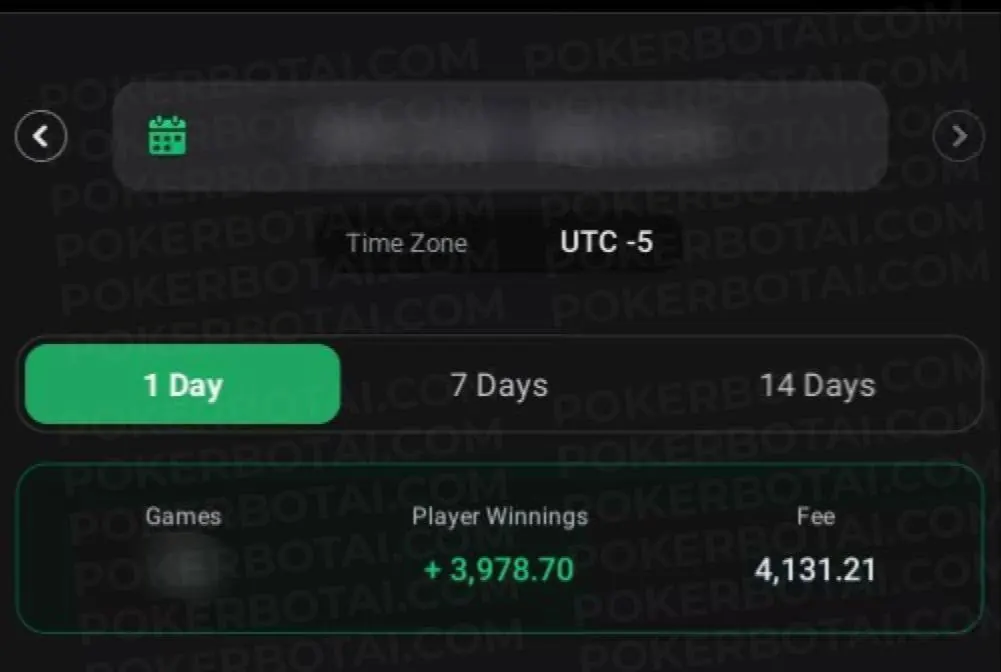
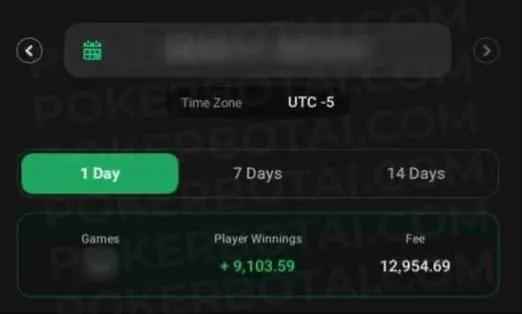
Daily results: ClubGG
Context: One partner’s daily results from a ClubGG club operation. The partner ran multiple NLH bot accounts at low-to-mid stakes. These are 9 individual playing days selected from a longer period. They show only profitable days. Losing days also occur and are a normal part of poker variance.
| Day | Profit |
|---|---|
| 1 | +$2,383 |
| 2 | +$2,548 |
| 3 | +$3,039 |
| 4 | +$3,978 |
| 5 | +$4,012 |
| 6 | +$4,194 |
| 7 | +$4,620 |
| 8 | +$6,607 |
| 9 | +$9,103 |
Average profit across these 9 days: ~$4,500/day.
Regional performance: ClubGG (Israel, ILS)
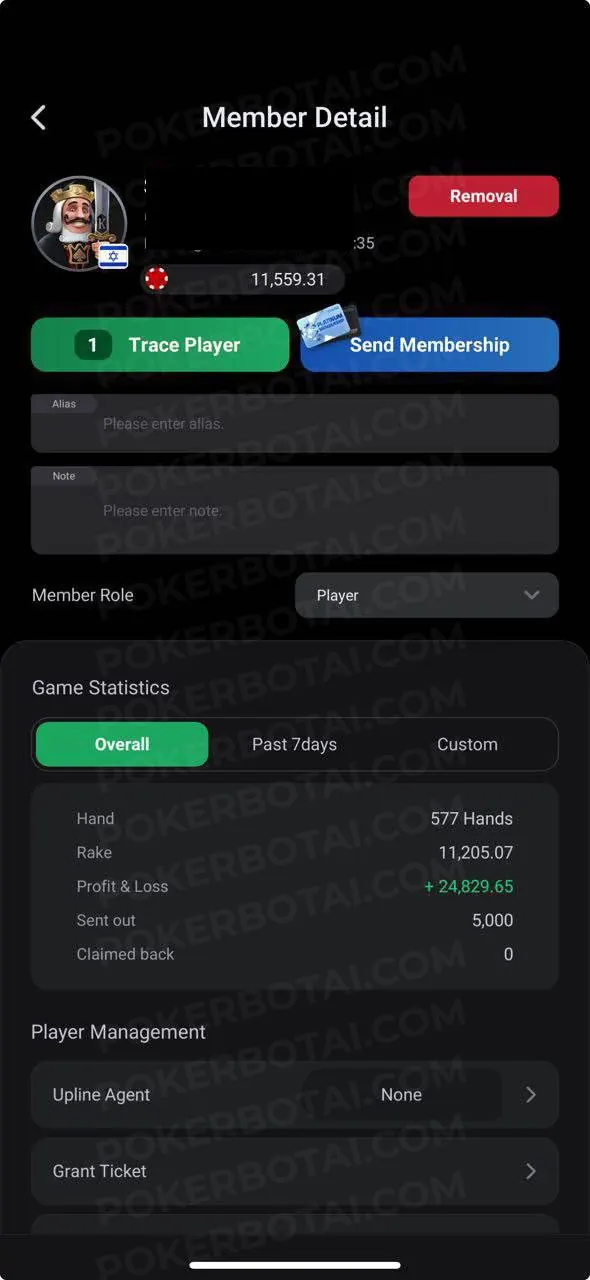
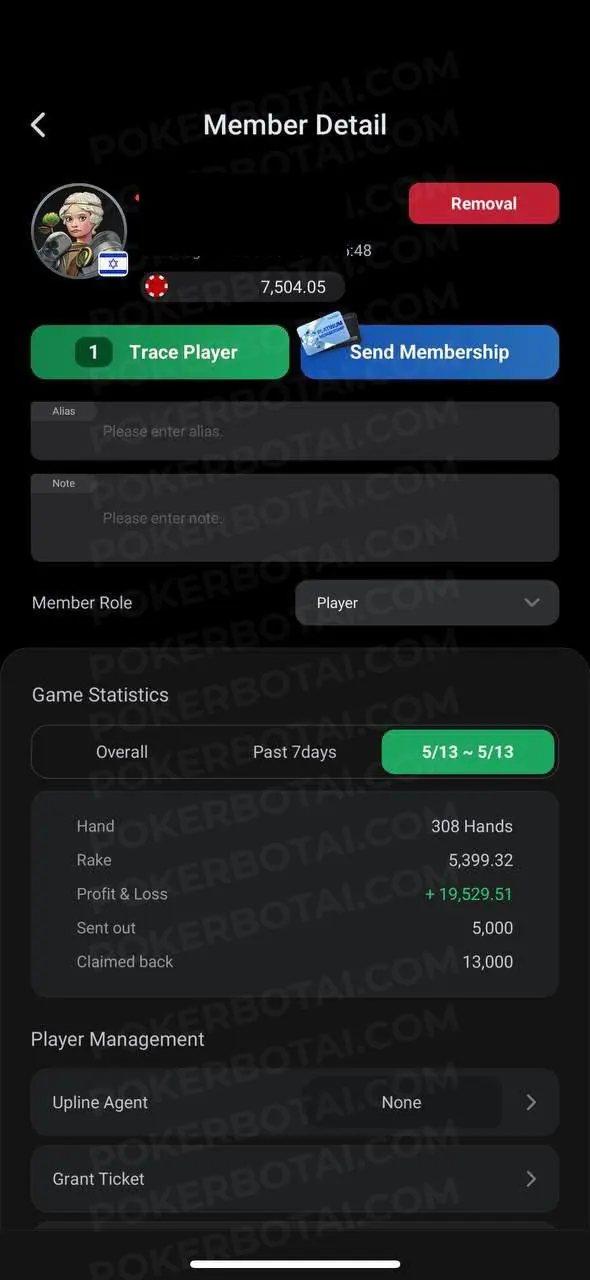
ClubGG clubs operate in multiple currencies worldwide. Here are results from an Israeli club: individual member statistics showing consistent profit over hundreds of hands:
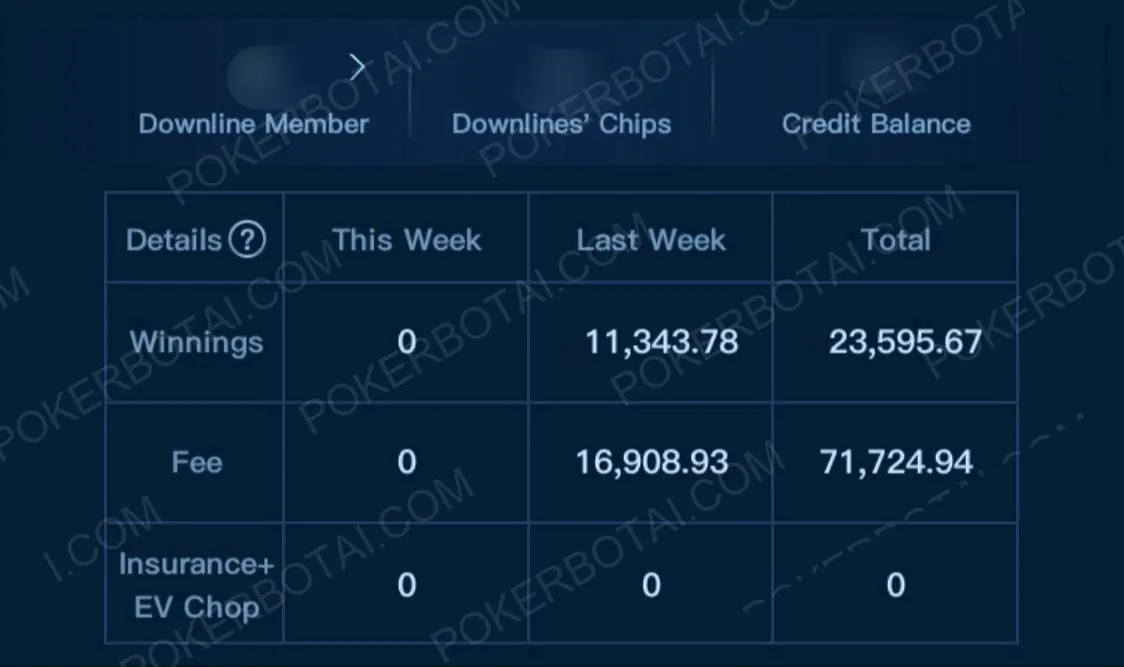
Large-scale operations: agent networks
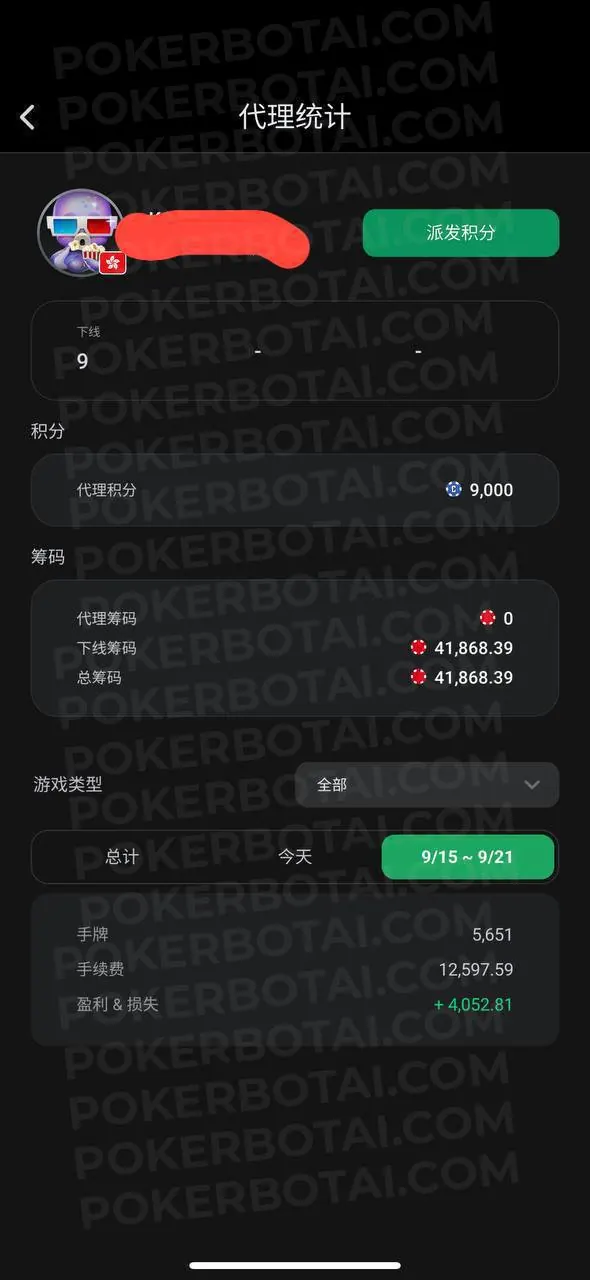
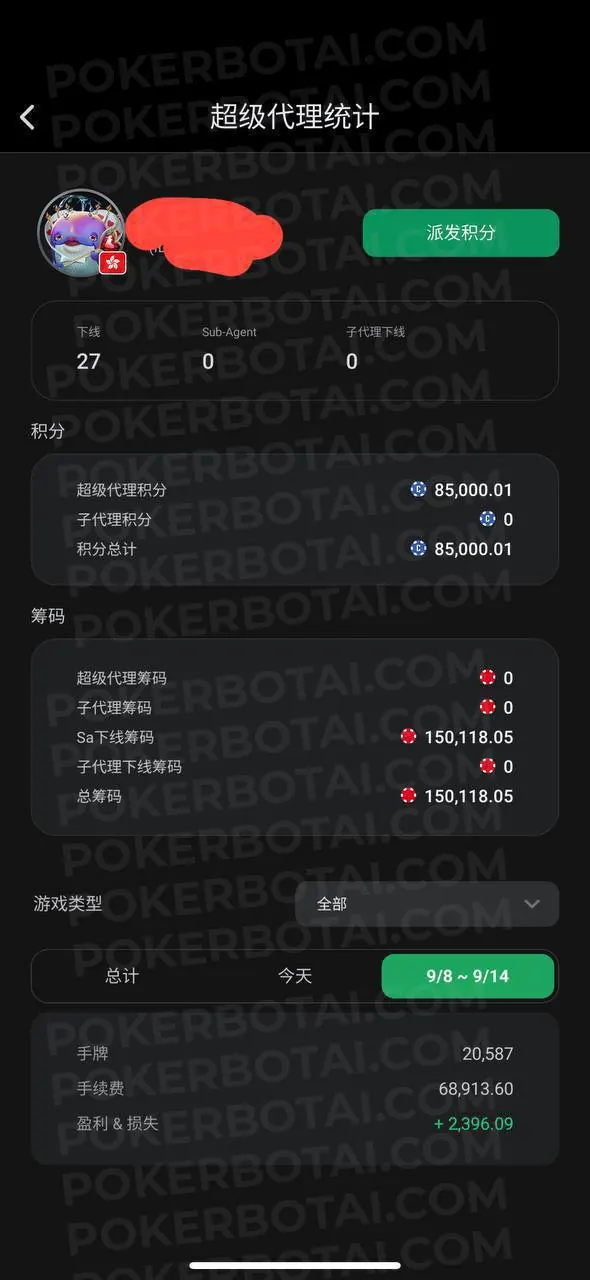
| Platform | Accounts | Hands/Week | Rake/Week |
|---|---|---|---|
| ClubGG (agent) | 9 | 5,651 | 12,597 HKD |
| ClubGG (super-agent) | 27 | 20,587 | 68,913 HKD |
| X-Poker | 15–24 | — | 10,900–12,000 BRL |
| ClubGG / PokerBros | — | — | $16,900–26,300 |
PLO: session results across platforms
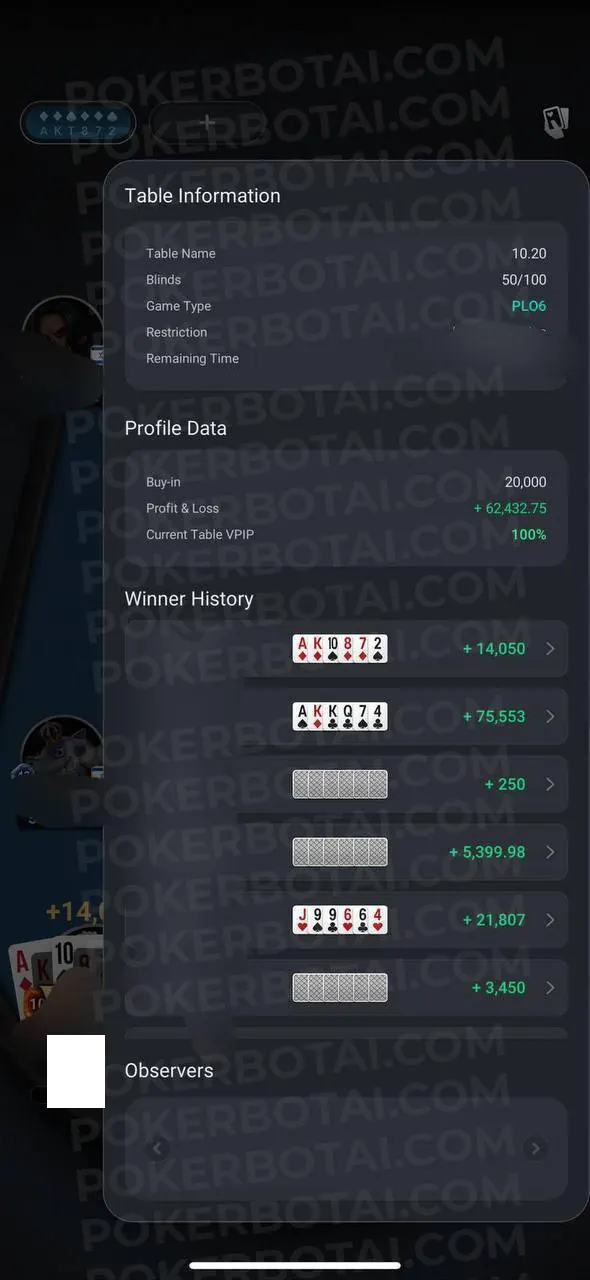
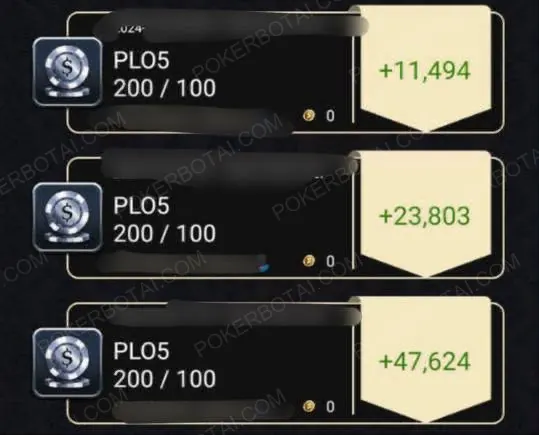
PokerBotAI bots support not only NLH but also PLO4, PLO5, PLO6, and OFC. Real PLO session results from our partners across multiple platforms:
- +$23,072, +$75,121, +$135,224 — PLO5 100/50 on PokerBros
- +$142,597, +$98,748 (PLO5 200/100–300/150)
- +$62,432 in a single PLO6 50/100 session on ClubGG (with a 20,000 chip buy-in, 312% ROI per session)
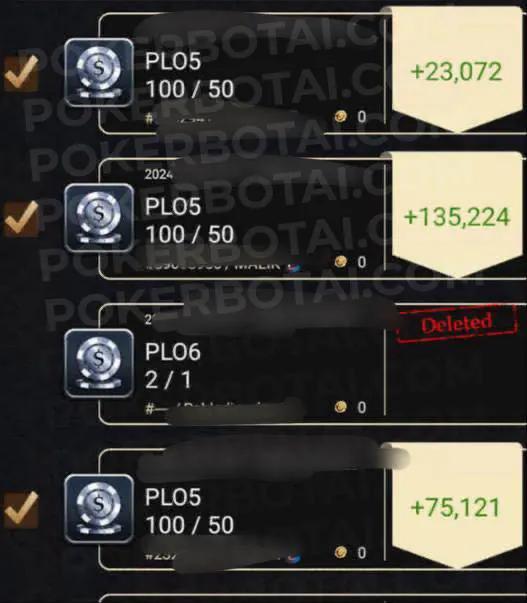
PLO5 results on Pokerrrr2 (India, INR):
High stakes: club games
At high stakes (blinds from 2,500/1,250 in club currency), results from a single session can reach hundreds of thousands and more. Top sessions from our partners: from +200,000 to +2,600,000 in local currency (e.g. Mongolian tugriks on Pokerrrr2).
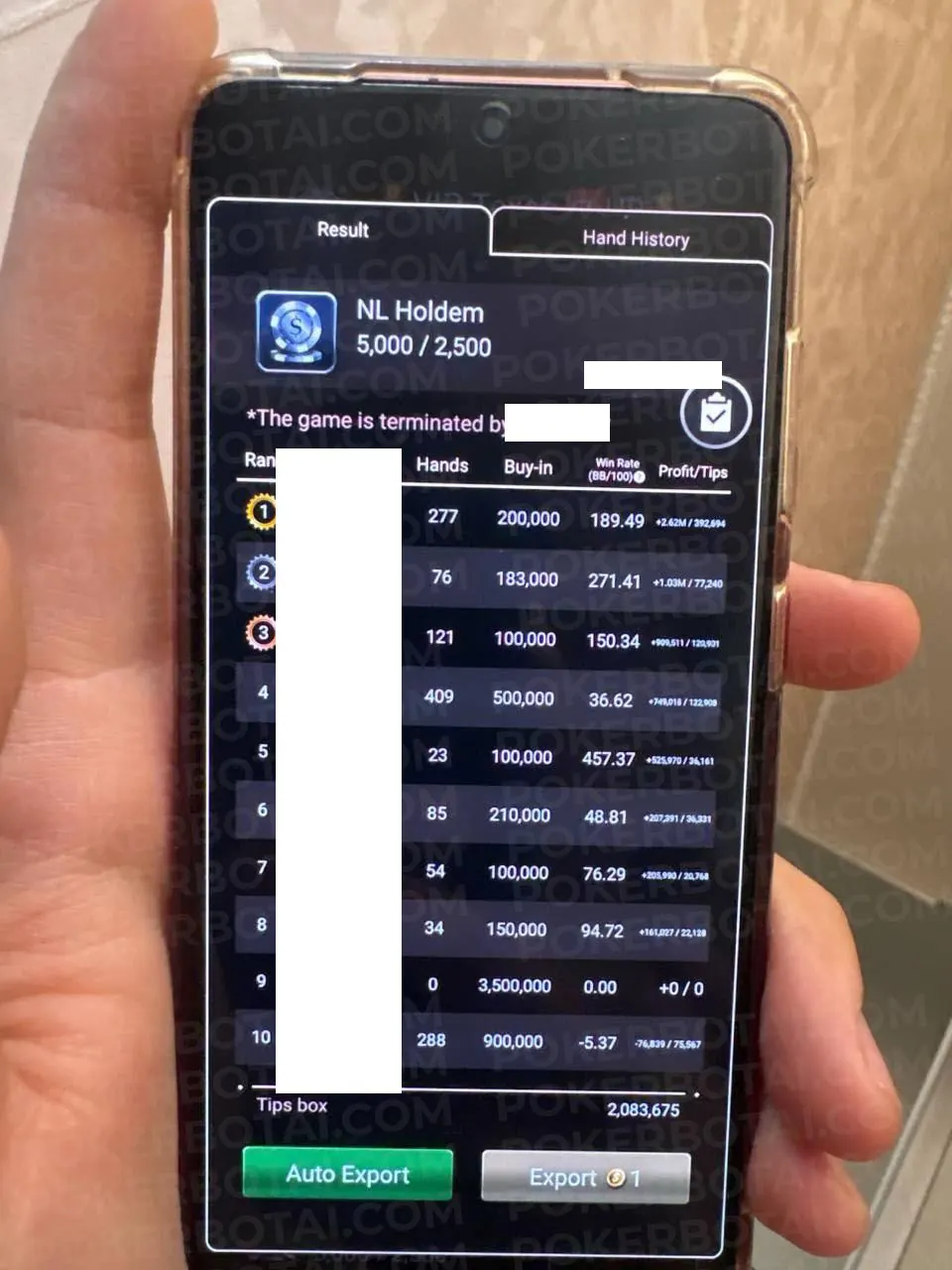
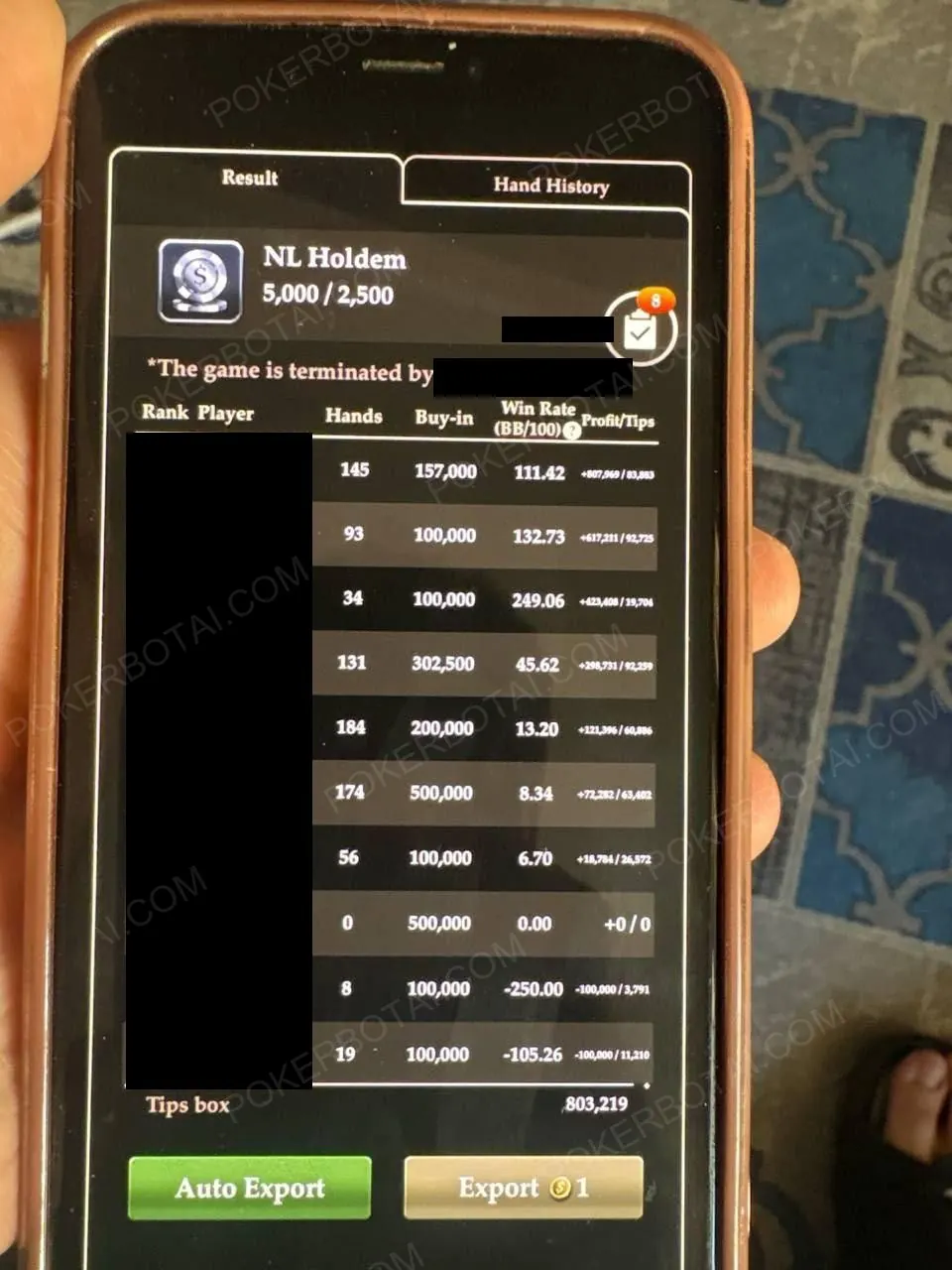
- Currency. Large amounts on Pokerrrr2 and X-Poker are often expressed in local currency (tugriks, reais, etc.), not USD. The actual dollar equivalent can be several times smaller.
- The field decides. Such results are possible where big money is actually circulating and there are enough recreational players. If your club has low traffic or small stakes, profit will be proportionally smaller.
- Variance works both ways. Every winning streak can be followed by a downswing.
Losing periods: variance in action
Not all periods are profitable — and that’s a normal part of poker:
-
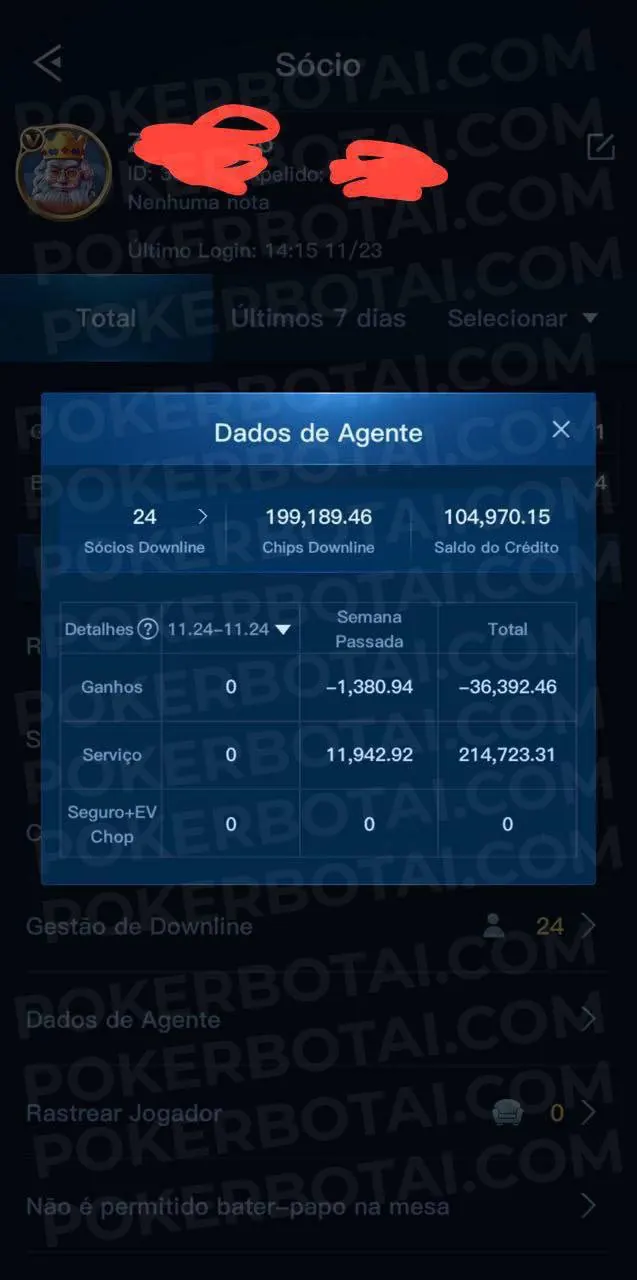
X-Poker, farm of 15-24 accounts: cumulative P&L was -36,392 BRL, while the farm generated 214,723 BRL in commissions. A loss on winnings with a gain on rake — a typical scenario on certain fields where rakeback compensates for variance.
-
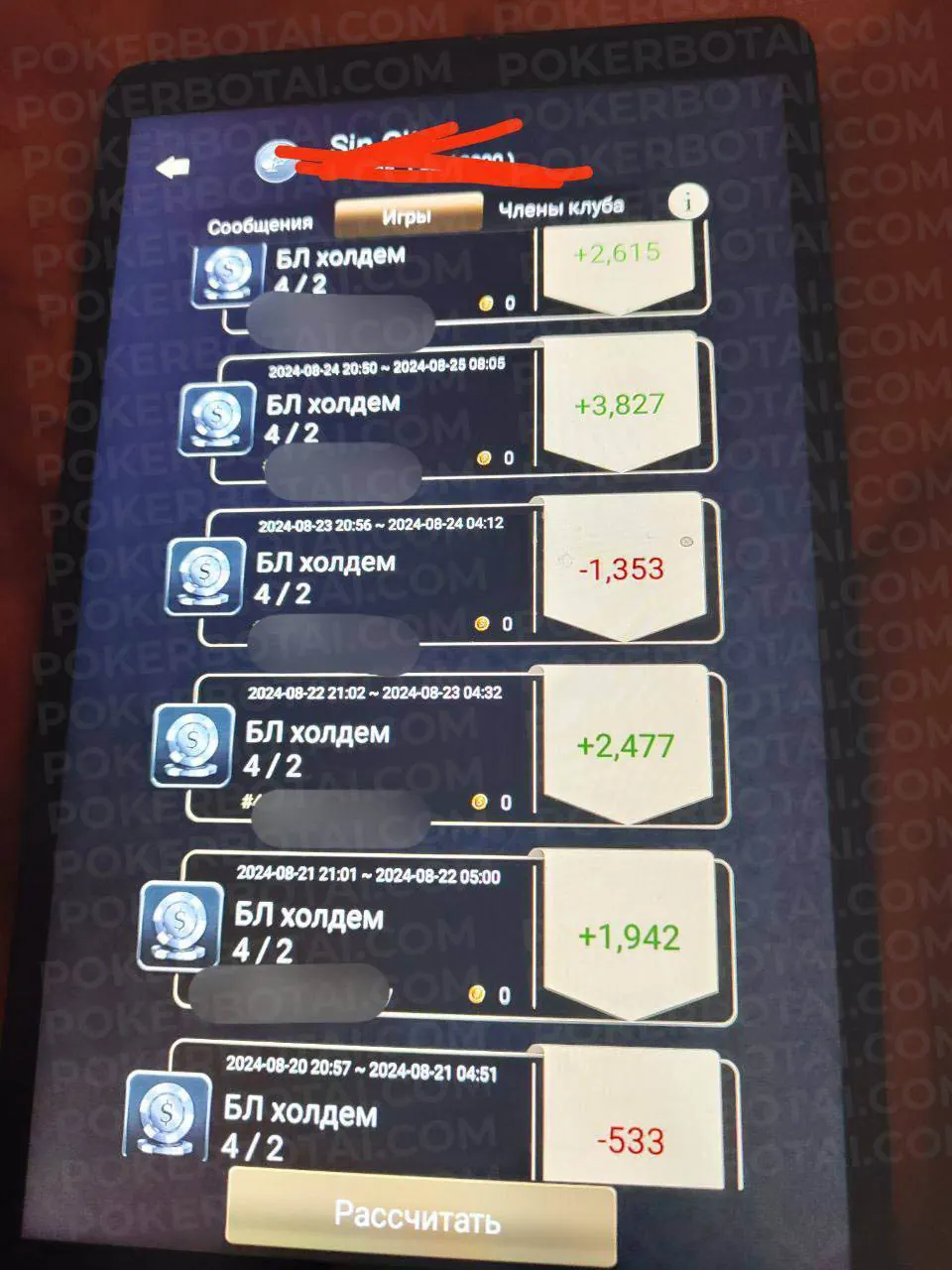
PokerBros, weekly NLH series: out of 6 sessions — 4 profitable, 2 losing (-1,353 and -533). Weekly total: +8,975. Losing days are a normal part of the long run.
-
PokerBros, PLO4/PLO5: in a series of 12 sessions — 3 losing (-1,400, -900, -500), but the overall result was positive thanks to large winning sessions (+3,697, +2,086, and others).
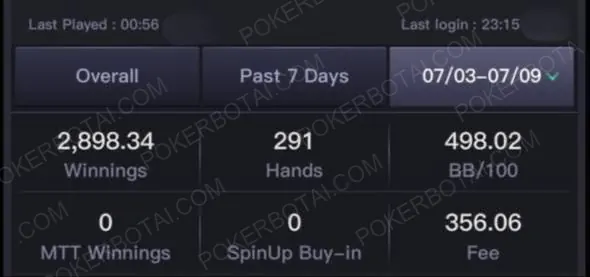
Weekly statistics from a PokerBros NLH player, 498 BB/100 winrate over 291 hands:
Major industry scandals: lessons for everyone
Martin Zamani: bot farm at the poker table (january 2026)
Well-known poker pro Martin Zamani was caught running a bot farm. This case showed that even professionals with a reputation can get detected. The consequences: loss of reputation, a ban, and a public scandal.
CoinPoker: $156k returned to victims
The CoinPoker platform conducted an investigation and returned $156K to players affected by bots. This is an example of how rooms respond to bot detection — fund confiscation and victim compensation.
PartyPoker: 291 accounts banned
PartyPoker blocked 291 accounts linked to bot operations. The mass ban shows that major rooms invest in detection systems and are prepared to take decisive action.
Lesson: improper setup and ignoring security measures lead to loss of accounts, deposits, and reputation. Following stealth recommendations is not optional. It’s a necessity.
Failure cases: where things went wrong
Failure #1: ignoring AI advice
| Period | AI Adherence | Result |
|---|---|---|
| First week (~1,200 hands) | Manual play, overriding AI hints | Mediocre, negative EV |
| After switching to auto mode | 100% (auto mode, multiple bots) | 41 bb/100, consistent profit |
| Total | — | Time and money wasted in manual phase |
The user played manually with AI hints for about a week (roughly 3-4 hours per day, ~1,200 hands total). They frequently overrode the AI recommendations, trusting their own reads over calculated lines. After a week of break-even results and growing frustration, they switched to full auto mode with multiple bot accounts. The difference was immediate. The bots hit 41 bb/100 with zero manual intervention.
Failure #2: datacenter IP instead of residential
A classic story: the user saved money on proxies, grabbed cheap server IPs. Within a week, they were banned.
Why this happens:
-
Poker rooms maintain databases of datacenter IPs
-
Multiple accounts from the same IP range = red flag
-
Even if the software works perfectly, a bad IP kills the account
Masking Best Practices + Launch Checklist
Failure #3: panic over short-term results
A real case from the statistics:
-
First 6,000 hands — zero result, the curve trends downward
-
The user panicked and started changing settings
-
Switched to another room, then came back
-
Ended up losing time and money from all the jumping around
Meanwhile, those who continued on the same track without changes:
-
By 20K hands — win rate of 38 bb/100
-
EV grew steadily, while actual results fluctuated
-
Variance smoothed out, profit materialized
Failure #4: poor bankroll management
Most players who lose their bankroll do so not because of bad luck. They lose because they don’t manage risk properly.
A typical scenario:
-
Starting bankroll of $500 at NL50 (10 buy-ins)
-
Downswing of -3 buy-ins in one session
-
Attempt to recover at NL100
-
Result: -$500 in one evening
Lessons from the cases: what works
1. The long run decides everything
No success story is built on 5,000 hands. The minimum for conclusions is 50K+ hands. Over a short sample, variance can show anything: +50 bb/100 and -30 bb/100 alike. Only the long run reveals the true picture.
2. AI is smarter than intuition
The neural network is trained on 300+ million real hands (statistics from all poker rooms since the 2000s) and 7+ billion synthetic and solver-generated hands. Your intuition is based on a few thousand. When the AI says “fold” and you feel “call”, in 99% of cases, the AI is right. Failure #1 in this article proves it.
3. Infrastructure matters more than software
The best bot in the world won’t help if you’re using server proxies, holding 5 buy-ins at your level, and playing from one IP across 10 accounts. Most failures are not “bad bot” but “bad setup.”
4. Scale works
The large farm case shows: with the right approach, scaling linearly increases profit. ROI may decrease as volume grows, but absolute numbers increase.
5. Deep stack = more EV
The data is clear: the difference between playing at <100bb and 300-400bb is approximately 20 bb/100. The AI better capitalizes on its edge with deep stacks.
Realistic expectations: what you can expect
| Scenario | Fuel Investment | Expected ROI (on fuel) | Monthly Profit |
|---|---|---|---|
| Single account | $200-500 | 200-400% | $400-2,000 (depends on stakes) |
| Small farm (5-15 acc) | $1,000-3,000 | 150-300% | $1,500-5,000 (depends on number of bots and scale) |
| Large farm (50+ acc) | $5,000+ | 100-250% | $5,000-15,000+ (depends on number of bots, rooms, and stakes) |
More details in the article about bot ROI
Poker is a marathon, not a sprint. And bots play by the same rules.
Poker Bot ROI: Realistic Expectations
How Rooms Catch Bots: Detection Methods 2026
Variance and the Long Run: Why Results Are Deceiving
Masking Best Practices + Launch Checklist
TurnKey PokerBotFarm (The Deal)
How Much Do Poker Bots Cost + Solution Comparison
Related articles
Why PokerBotAI: 2026 Review
Choosing the Right Room and Stakes
Multi-Tabling with Bots: Risks and Optimization